Leave Your Message
Choosing a Bitcoin Miner in 2026 requires more than comparing advertised hash rates. The right Bit Coin Miner must match your electricity price, cooling conditions, budget, and operating experience. A machine drawing 3,500 watts can sound impressive, yet it may produce disappointing results in a hot garage with expensive power. Heat becomes visible quickly. Fans roar. Dust gathers around the intake grills.
Fred Thiel, chairman and CEO of MARA, has described the industry plainly: “Bitcoin mining is an energy business.” That observation should guide every purchase decision. Examine efficiency, measured in joules per terahash, before focusing on headline performance. Review warranty terms, firmware support, noise levels, power supply requirements, and realistic delivery dates. Manufacturer specifications matter, but independent testing matters more. Results can change with pool fees, network difficulty, Bitcoin’s market price, and local energy rates.
A professional evaluation also includes safety. Use certified electrical equipment, proper ventilation, and qualified technicians when necessary. Avoid sellers who promise guaranteed profits. No mining calculator can predict the future perfectly. I would not treat a projected payback period as a promise. It is only a scenario.
The strongest choice may be a newer efficient model, a tested used unit, or no purchase yet. That depends on evidence, not excitement. This guide will compare practical machines, ownership costs, and operating risks. Its goal is simple: help readers choose a Bit Coin Miner with clearer expectations and fewer expensive surprises.
Bitcoin mining is a competitive process that confirms transactions and protects the network. A miner collects pending transactions into a candidate block. It then repeatedly changes a small value called a nonce. Each attempt produces a cryptographic hash.
The goal is to find a hash below the network’s current target. This requires enormous computing power and constant electricity. When a miner succeeds, the network checks the block independently. The miner may receive newly issued bitcoin and transaction fees. It is relentless. Mining difficulty adjusts regularly, so yesterday’s profitable machine may perform poorly later.
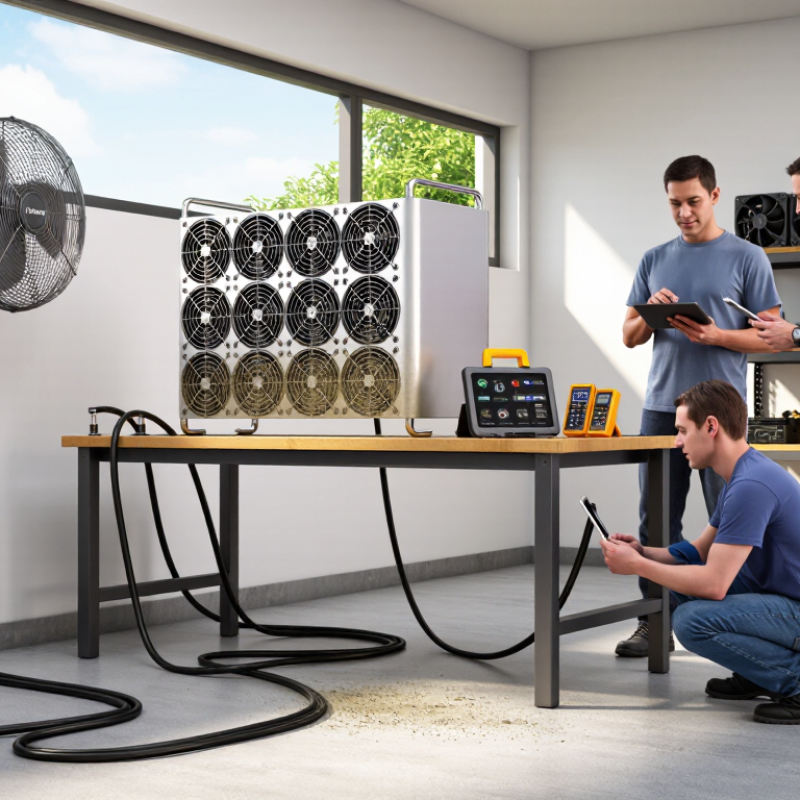
Choosing a miner in 2026 requires more than comparing advertised hashrate. Check energy efficiency, measured in joules per terahash, because electricity usually dominates operating costs. Heat matters. A machine running in a warm room needs stronger ventilation and may become unstable. Noise can also exceed expectations in a home setting. That assumption fails.
Review power requirements, cooling design, repair access, software transparency, and warranty terms. Pool mining can reduce income swings, but fees and payment rules deserve careful reading. Calculate hardware cost, electricity, cooling, maintenance, and downtime together. My practical warning is simple: projected income is never guaranteed. A spreadsheet can look precise while ignoring rising difficulty, outages, or changing fees. Test the electrical circuit and measure actual power consumption before committing.
| Dimension | What It Means | Realistic Data or Reference Range | How It Affects Your Choice |
|---|---|---|---|
| Bitcoin Mining Basics | |||
| Mining algorithm | The mathematical process used to search for a valid Bitcoin block. | Bitcoin uses SHA-256, applied in a double-hashing process known as SHA-256d. | Choose hardware designed specifically for SHA-256. Hardware built for another algorithm cannot efficiently mine Bitcoin. |
| What a miner actually does | A miner repeatedly changes a block-header value and calculates hashes until one is below the network target. | Each hash is an independent attempt. The network target determines how difficult it is to find a valid result. | Higher hashrate means more attempts per second, but it also normally requires more electricity and cooling capacity. |
| Hashrate | The number of SHA-256 calculations performed each second. | Common modern equipment is typically measured in terahashes per second (TH/s); 1 TH/s equals 1 trillion hashes per second. | Use hashrate to estimate expected mining output, but never evaluate it without checking power consumption and efficiency. |
| Block interval | The average target time for the Bitcoin network to add a new block. | Approximately 10 minutes on average, although individual blocks may arrive sooner or later. | Mining income is probabilistic. A miner does not receive a predictable payment every 10 minutes. |
| Difficulty adjustment | The network changes the mining target to keep the long-term block interval near its target. | Difficulty is adjusted every 2,016 blocks, approximately every two weeks. | Increasing network difficulty can reduce your share of mined rewards even when your hardware operates normally. |
| Block reward | The reward associated with successfully mining a block. | As of 2026, the Bitcoin subsidy is 3.125 BTC per block, plus transaction fees. The next scheduled halving is expected around 2028, subject to block timing. | Future subsidy reductions should be included in long-term profitability planning. |
| Mining pool | A group of miners that combines hashrate and distributes rewards according to contributed work. | Pool payouts are generally smaller and more frequent than solo-mining payouts, subject to the pool’s payout method and fee. | For most individual operators, a pool provides more predictable cash flow than attempting to mine alone. |
| Hardware Selection Criteria | |||
| Miner type | The hardware architecture used to perform SHA-256 calculations. | ASIC miners are purpose-built for Bitcoin and are substantially more efficient than general-purpose CPUs or GPUs for this task. | For Bitcoin mining, compare SHA-256 ASIC equipment rather than desktop computers, graphics cards, or cloud-computing instances. |
| Representative hashrate class | A practical way to compare equipment capacity without relying on a specific manufacturer or model. |
Entry class: 30–80 TH/s Mainstream class: 80–180 TH/s High-capacity class: 180–300+ TH/s |
Higher hashrate can increase expected revenue, but only if electricity, ventilation, noise control, and electrical circuits can support it. |
| Power consumption | The electrical load required while the miner is operating. |
Entry class: approximately 1.5–3.0 kW Mainstream class: approximately 2.5–4.0 kW High-capacity class: approximately 3.5–6.0+ kW |
Power cost is usually the largest recurring expense. Confirm circuit capacity, breaker rating, wiring, and operating hours before purchase. |
| Energy efficiency | The electricity required to produce one terahash of computing power. | Measured in joules per terahash (J/TH). A lower value is better. Modern air-cooled equipment commonly falls within a broad range of approximately 15–40 J/TH. | Efficiency is often more important than headline hashrate when electricity prices are high or the miner will operate continuously. |
| Efficiency calculation | A simple method for checking whether a specification is internally consistent. | Efficiency (J/TH) = Power (watts) ÷ Hashrate (TH/s) | For example, a 3,000-watt miner producing 100 TH/s uses approximately 30 J/TH. |
| Electrical input | The voltage and current required by the miner and its power supply. | Many high-power units require dedicated circuits and may operate at approximately 200–240 volts. Exact requirements vary by equipment. | Have a qualified electrician verify the supply, grounding, breaker, connectors, and continuous-load rating. Do not rely on household extension cords. |
| Cooling requirement | The system needed to remove the heat produced by the miner. | Nearly all electrical power consumed becomes heat. A 3,000-watt miner produces roughly 3,000 watts of heat during operation. | Plan airflow, intake filtration, exhaust capacity, and temperature monitoring. Insufficient cooling can cause throttling, shutdowns, or component damage. |
| Noise level | Sound produced by high-speed fans and airflow. | Air-cooled ASIC miners commonly operate around 70–85 dB, depending on load, temperature, fan speed, and enclosure design. | This is generally unsuitable for bedrooms, offices, and noise-sensitive residential spaces without substantial acoustic isolation. |
| Operating temperature | The temperature range in which the miner can operate reliably. | Exact limits vary, but lower and stable inlet temperatures generally improve reliability. Hot environments can trigger automatic fan-speed increases or shutdowns. | Compare the expected ambient temperature with the equipment’s documented operating limits and leave thermal headroom for seasonal changes. |
| Cost, Revenue, and Risk Assessment | |||
| Daily electricity cost | The cost of running the miner for 24 hours. | Daily cost = Power (kW) × 24 × Electricity rate | At 3.0 kW and $0.08 per kWh, the electricity cost is approximately $5.76 per day, before cooling overhead, taxes, and other fees. |
| Mining revenue | The gross value earned from block subsidies and transaction fees allocated through a pool. | Revenue changes with Bitcoin’s market price, network difficulty, total network hashrate, transaction fees, pool fees, and uptime. | Use conservative estimates and test several Bitcoin-price and difficulty scenarios rather than relying on one profitability estimate. |
| Profitability formula | A basic way to estimate operating profit before fixed costs and taxes. | Profit = Gross mining revenue − Electricity cost − Pool fees − Cooling and maintenance costs | A miner can produce Bitcoin and still lose money if its electricity and operating costs exceed its revenue. |
| Uptime | The percentage of time the miner is powered on, connected, and submitting valid work. | A theoretical 24-hour operating period equals 100% uptime; outages, maintenance, overheating, and network problems reduce actual uptime. | Stable internet, clean power, preventive maintenance, and remote monitoring can improve realized output. |
| Pool fee | The percentage or fixed charge deducted by the mining pool. | Many pools charge approximately 0.5%–3%, although the exact fee depends on the selected service and payout scheme. | Compare the fee with payout frequency, minimum payout, transparency, server reliability, and settlement terms. |
| Payback period | The estimated time required for cumulative net profit to equal the initial equipment and installation cost. | Payback period = Initial investment ÷ Expected monthly net profit | Payback estimates are highly sensitive to Bitcoin price, network difficulty, electricity cost, repairs, downtime, and future subsidy changes. |
| Used equipment risk | The possibility that previously operated equipment has reduced performance or remaining service life. | Common concerns include worn fans, dust contamination, damaged hash boards, unstable power supplies, corrosion, and inaccurate specifications. | Request operating history, test results, error logs, photographs, warranty terms, and a return policy before buying used equipment. |
| Home versus hosting site | The location where the miner will be installed and operated. | Home installations must manage noise, heat, electrical limits, ventilation, and local rules. Hosting sites may provide infrastructure but add service, transport, and counterparty risks. | Choose the location with the lowest total operating cost and the most reliable power, cooling, internet, maintenance, and legal compliance. |
| Best overall selection rule | A practical decision principle for comparing different miners. | Prioritize efficiency, reliable operation, realistic purchase cost, and affordable electricity over maximum hashrate alone. | Before purchasing, calculate profitability using your actual electricity tariff, expected uptime, cooling cost, pool fee, taxes, and a conservative Bitcoin-price scenario. |