Why Invest in Asic Miner for Optimal Cryptocurrency Mining?
As the cryptocurrency landscape evolves, the quest for efficiency intensifies. Investing in an Asic Miner presents a strategic advantage for miners. These highly specialized machines are designed specifically for cryptocurrency mining, outpacing traditional GPU setups in performance and energy efficiency.
Choosing an Asic Miner involves understanding its capabilities. Users can expect higher hash rates and lower power consumption, crucial for maximizing profits. However, the initial investment can be substantial. Potential investors must weigh the costs against the long-term benefits. A deep dive into trends and data is essential to make informed decisions.
While Asic Miners can deliver impressive returns, there are inherent risks. Market volatility and technology advancements can impact performance. It's vital for investors to stay informed and adaptable. This careful approach can cultivate both success and sustainability in the mining journey.
Understanding ASIC Miners: Definition and Functionality
ASIC miners, or Application-Specific Integrated Circuits, are specialized devices designed solely for cryptocurrency mining. They outperform general-purpose hardware like CPUs and GPUs in efficiency and speed. ASIC miners are built to perform a narrow set of tasks, which in this case is solving complex mathematical problems to validate transactions. This functionality makes them incredibly powerful but also limits their versatility compared to more adaptable mining solutions.
Investing in an ASIC miner offers significant advantages. These machines can achieve higher hash rates while consuming less electricity. However, they come with a higher initial cost. When choosing an ASIC miner, consider factors such as power consumption, cooling requirements, and noise levels. The setup can be quite complex, and any misconfiguration could lead to inefficiencies. It's crucial to read user reviews and understand what features matter most for your mining goals.
Despite their benefits, ASIC miners face challenges. Their market can be volatile, and technology advances rapidly. New models may quickly render older ones less effective, forcing miners to re-evaluate their investments. Additionally, the mining landscape is evolving, with shifts towards more energy-efficient practices. This reality prompts reflection on whether ASIC miners remain the best long-term investment for cryptocurrency mining.
Why Invest in Asic Miner for Optimal Cryptocurrency Mining?
| Dimension |
Details |
| Definition |
ASIC miners are specialized hardware designed specifically for mining cryptocurrencies. |
| Functionality |
They perform hash calculations much faster than general-purpose hardware. |
| Efficiency |
ASIC miners typically consume less power per hash compared to GPU miners. |
| Profitability |
Higher hash rates lead to higher chances of earning rewards for mining efforts. |
| Longevity |
ASIC miners may have a shorter lifespan due to rapid technological advancements. |
| Initial Investment |
They often require a significant upfront cost compared to other mining solutions. |
| Heat Management |
Effective cooling solutions are essential to maintain optimal performance. |
| Market Trends |
The ASIC mining market is influenced by cryptocurrency prices and mining difficulty. |
Advantages of ASIC Miners Over GPU and CPU Mining
ASIC miners have emerged as the backbone of cryptocurrency mining, offering numerous advantages over traditional GPU and CPU methods. With dedicated hardware tailored for specific algorithms, ASIC miners deliver significantly higher hash rates. According to a recent report by CoinDesk, ASIC miners can outperform GPUs by as much as 100 times in efficiency. This stark difference highlights why many serious miners are shifting towards ASIC technology.
The energy consumption of ASIC miners is also notable. They typically consume less power while providing higher performance. A study from the Cambridge Centre for Alternative Finance shows that ASIC miners produce up to 25% lower carbon emissions compared to GPU setups. This efficiency not only cuts down operational costs but also aligns better with the growing demand for sustainable mining practices.
Tips: Consider heat management when investing in ASIC miners. They generate considerable heat, requiring effective cooling solutions. Proper ventilation can extend the lifespan of your devices. Additionally, keep an eye on the market's volatility. ASIC miners can be a significant investment, and fluctuating cryptocurrency prices can affect profitability. Ensure that your calculations reflect these dynamics to make informed decisions.
Key Features to Consider When Choosing an ASIC Miner
When selecting an ASIC miner, various key features significantly influence your investment decision. Hash rate stands out as a primary indicator. This metric defines the miner's computational power. A higher hash rate typically translates to better chances of solving blocks and earning rewards. For instance, miners with hash rates exceeding 100 TH/s have seen average earnings rise by 20% in competitive environments.
Energy efficiency is another crucial aspect. ASIC miners vary widely in their power consumption. The latest data reports indicate that the balance between hash rate and energy performance can sway profitability. Miners achieving over 25 J/TH (joules per terahash) often indicate stronger long-term returns.
Cooling systems also require attention. Effective thermal management ensures optimal performance. Miners that operate above recommended temperatures may face reduced efficiency and lifespan. Some experts argue that investing in advanced cooling solutions can mitigate these risks effectively. Ultimately, understanding these features can enhance decision-making in your ASIC miner journey.
Evaluating the Return on Investment for ASIC Mining
Investing in ASIC miners can be a smart move for those looking to optimize their cryptocurrency mining efforts. The return on investment (ROI) for ASIC mining often outweighs the initial costs. With the right understanding, miners can expect higher yields compared to traditional mining setups. ASIC miners are designed specifically for a single algorithm, increasing efficiency and performance.
Before investing, consider the electricity costs. These can significantly impact your ROI. Research local energy prices and potential subsidies for mining projects. High power consumption often leads to diminishing returns in profit.
**Tip:** Monitor market trends closely. Cryptocurrency values fluctuate wildly. An initial investment may look promising today but could change tomorrow. Always perform a cost-benefit analysis. Every miner should be ready to adapt their strategy based on market conditions. This will prevent potential losses and improve overall ROI.
Remember, the mining landscape is competitive. Not every ASIC miner guarantees success. Some models might require substantial maintenance and might not yield as expected. Assess not just costs, but also the longevity and reliability of your chosen equipment.
Investment in ASIC Miners: A Comparison of Returns
Future Trends in ASIC Mining Technology and Cryptocurrency Market
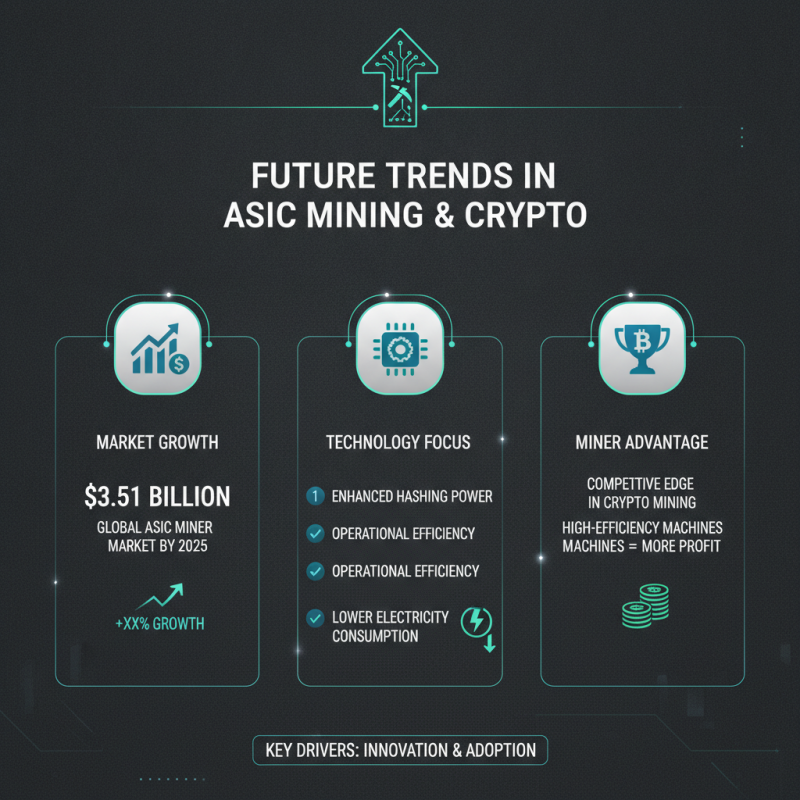
The landscape of ASIC mining technology is rapidly evolving. Recent reports indicate that the global ASIC miner market is projected to grow significantly, reaching a valuation of $3.51 billion by 2025. This trend highlights an increasing adoption of highly efficient mining machines, as miners seek competitive advantages in the cryptocurrency market. Enhanced hashing power, operational efficiency, and lower electricity consumption are key factors driving this growth.
Future trends indicate that ASIC miners will incorporate advanced cooling systems and better energy management capabilities. A study found that energy costs can account for more than 80% of mining expenses. Thus, miners are increasingly looking for solutions that optimize power usage. However, the swift technological change raises concerns about obsolescence. Miners must navigate the risks of quickly outdated hardware as new models emerge.
Moreover, the cryptocurrency market remains volatile, with pricing influenced by technological advancements and regulatory shifts. In 2023, Bitcoin's price fluctuated significantly, often mirroring changes in mining efficiency. Miners should reflect on their strategies to balance investment in technology with market conditions. Staying informed about ASIC advancements can provide a competitive edge, but it also requires careful consideration of potential market pitfalls.